But one question pops up before pulling out of the driveway:
Is a hitch cargo carrier actually safe for long highway trips?
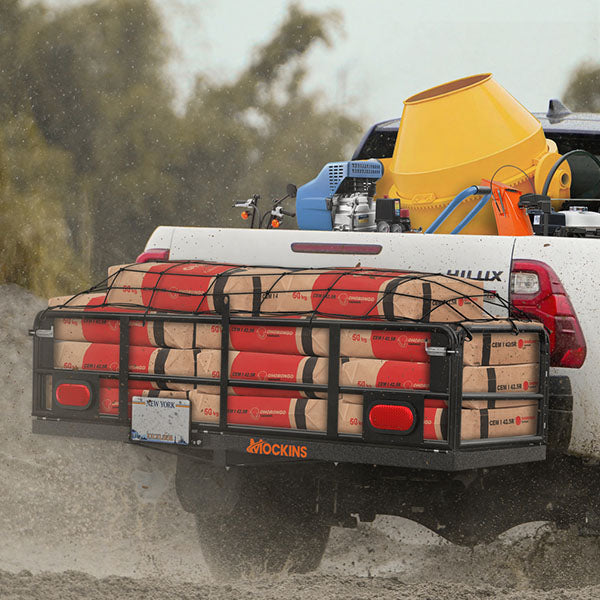
The short answer is yes. When installed and loaded correctly, a trailer hitch cargo carrier is one of the safest and most convenient ways to transport extra gear on extended drives.
Thousands of drivers rely on them for cross-country moves, national park adventures, tailgates, and family vacations.
The key is knowing how to set it up properly before you leave.
Here is what every road tripper should know.
🚗 Are Hitch Cargo Carriers Safe for Highway Driving?
Yes. Hitch cargo carriers are designed for highway travel and long-distance trips when used within their rated limits.
Most quality carriers support 400 to 500 pounds of cargo, making them suitable for luggage, coolers, camping gear, and bulky equipment.
Safety depends on three factors:
• Proper hitch compatibility
• Even weight distribution
• Secure cargo tie-down
When those elements are in place, hitch carriers remain stable even at highway speeds.
⚖️ Check Your Hitch Weight Capacity First
Before loading anything, confirm your vehicle’s tongue weight rating.
Tongue weight is the amount of downward force your hitch receiver can safely support. For most vehicles:
| Hitch Class | Typical Tongue Weight |
|---|---|
| Class I | 100–200 lbs. |
| Class II | 200–350 lbs. |
| Class III | 350–500 lbs. |
| Class IV | 500+ lbs. |
Your cargo carrier weight counts toward this limit.
Example:
• Carrier weight: 55 lbs.
• Cargo weight: 300 lbs.
• Total tongue weight: 355 lbs.
Always stay within your hitch rating for safe travel.
📦 Load Your Cargo the Right Way
How you pack the carrier matters more than most people realize.
Improper loading can create sway or imbalance during long drives.
Best practices:
✔ Place heavier items closest to the vehicle
✔ Keep weight centered in the carrier
✔ Avoid stacking gear too high
✔ Distribute cargo evenly from side to side
Balanced loads keep the carrier stable and reduce stress on the hitch connection.
🔒 Secure Everything Like You’re Driving Through a Wind Tunnel
Highway speeds create strong airflow behind your vehicle. Loose gear can shift or bounce if it is not secured properly.
For long trips, always use:
✔ Ratchet straps or heavy-duty tie-downs
✔ A waterproof cargo bag for loose items
✔ A cargo net for additional security
Double-check straps after the first 30–50 miles of driving.
Cargo naturally settles during travel, and tightening straps early prevents movement later in the trip.
🔧 Eliminate Wobble Before You Leave
Some movement in a hitch-mounted accessory is normal, but excessive wobble can cause noise and long-term wear.
Most carriers include an anti-tilt or stabilizer system to minimize movement inside the receiver tube.
Before hitting the highway:
✔ Tighten the hitch pin, locking bolt or hitch lock
✔ Install the stabilizer bracket if included
✔ Check that the carrier platform sits level
A properly tightened carrier should feel solid with minimal side-to-side movement.
🌧️ Protect Your Gear from Weather and Road Spray
Rear-mounted carriers sit directly behind the vehicle, which exposes cargo to road debris and weather.
For long trips, protection matters.
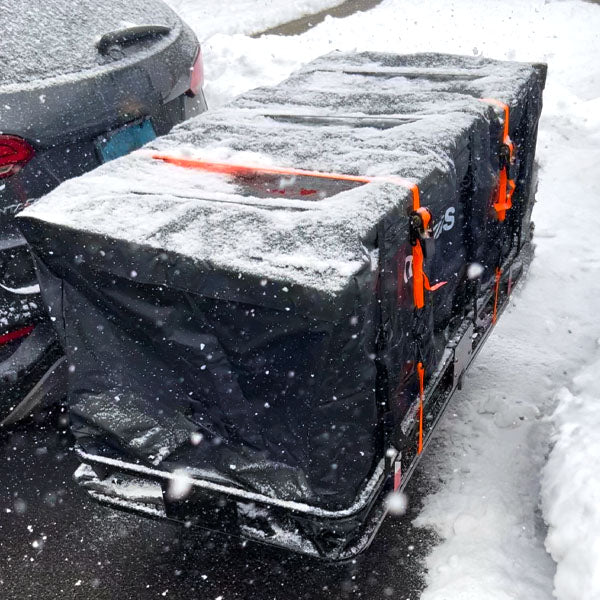
Waterproof cargo bags help shield luggage and equipment from:
• Rain
• Dust
• Highway grime
• Road salt
They also keep gear contained so nothing shifts during long stretches of driving.
👀 Check Visibility and Clearance
After loading the carrier, do a quick walk-around inspection.
Confirm that:
✔ Your license plate is visible
✔ Tail lights and brake lights are not blocked
✔ The carrier clears your exhaust
✔ Ground clearance is sufficient for driveways and bumps
If needed, a license plate relocation bracket or auxiliary lights can improve visibility and stay compliant with local regulations.
🛣️ Make Quick Safety Checks During the Trip
Long trips mean hours of driving. A quick stop every few hours keeps everything secure.
At fuel or rest stops:
• Check that straps remain tight
• Inspect hitch connections
• Make sure cargo has not shifted
These quick checks take less than a minute and add peace of mind on long drives.
❗Common Mistakes to Avoid
Even experienced travelers sometimes overlook these basics.
❌ Exceeding hitch weight limits
❌ Using weak bungee cords instead of straps
❌ Loading weight far from the vehicle
❌ Ignoring wobble or loose hardware
❌ Blocking tail lights or license plates
Avoiding these mistakes dramatically improves safety on long trips.
🚙 Why Many Road Trippers Prefer Hitch Carriers
Compared with rooftop storage, hitch-mounted cargo carriers offer several advantages:
• Easier loading and unloading
• No heavy lifting overhead
• No impact on vehicle roof clearance
• Better fuel efficiency than roof boxes in many cases
For bulky gear like coolers, tents, and camp equipment, they are often the simplest storage solution.
Final Thoughts: Safe Travel Starts with Smart Packing
Hitch cargo carriers are built for road trips. When installed properly and loaded within their limits, they are a safe and reliable way to expand your vehicle’s storage capacity.
A few minutes spent securing cargo, checking weight limits, and tightening hardware ensures your gear stays exactly where it belongs for the entire journey.
And that means fewer worries on the road and more time focusing on the adventure ahead.
🚗 Ready to Pack for Your Next Adventure?
Mockins hitch cargo carriers are designed for stability, durability, and road trip reliability. From lightweight aluminum baskets to complete carrier and cargo bag sets, there is a solution built for every kind of traveler.
Explore the Mockins lineup and find the cargo carrier that keeps your gear secure for the long haul. You can also check out our feature in Car and Driver!